
Sieves and Ultrasonic Sifters: Improve Industrial Screening Efficiency
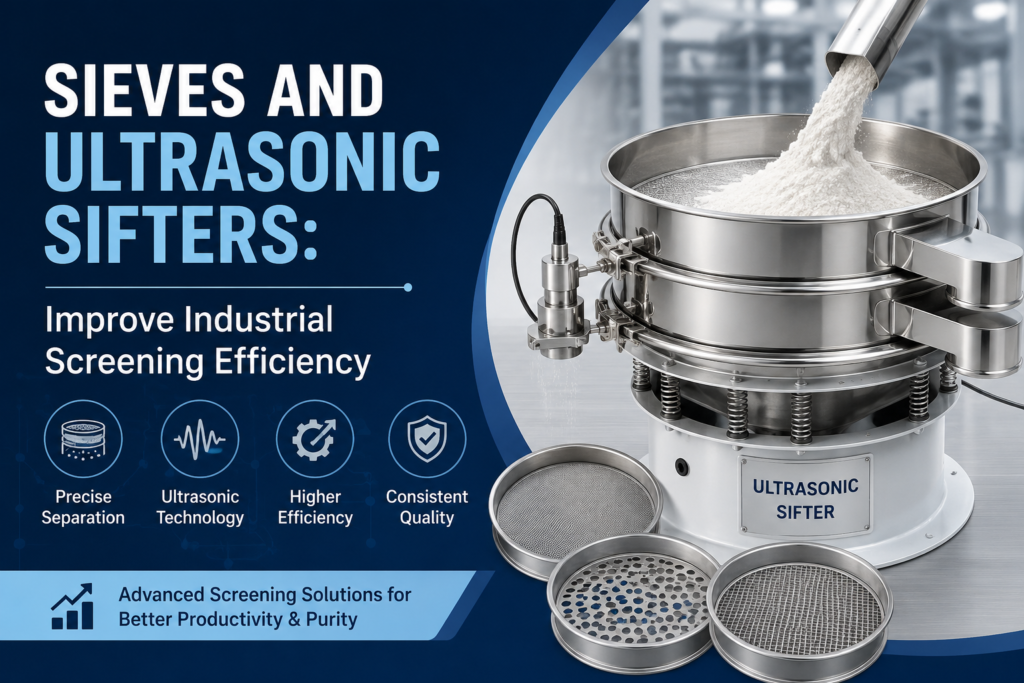
In modern manufacturing, achieving precise particle separation is essential for maintaining product quality and production efficiency. Sieves and ultrasonic sifters have become indispensable tools across industries such as pharmaceuticals, food processing, chemicals, cosmetics, and metal powders. These advanced screening solutions help manufacturers improve throughput, reduce material waste, and achieve consistent product quality.
This guide explains how its work, their benefits, applications, and why investing in an Ultrasonic industrial sifter sieve can significantly improve your production process.
What Are Sieves and Ultrasonic Sifters?
Traditional sieves separate particles based on size using woven mesh screens. While effective, they can experience mesh blinding, especially when processing fine or difficult powders.
Sieves and ultrasonic sifters combine conventional screening technology with ultrasonic vibration. High-frequency ultrasonic waves are transmitted through the sieve mesh, preventing particles from clogging the screen and allowing finer materials to pass efficiently.
This technology ensures continuous operation while maintaining high screening accurac
How Does an Ultrasonic Industrial Sifter Sieve Work?
An Ultrasonic industrial sifter sieve uses an ultrasonic generator and transducer to create high-frequency vibrations on the sieve mesh. These microscopic vibrations keep the mesh surface clear during operation.
The process offers several advantages:
- Prevents mesh blockage
- Improves screening efficiency
- Handles ultra-fine powders with ease
- Increases production capacity
- Reduces downtime for cleaning
Unlike conventional vibrating sifters, ultrasonic systems maintain consistent performance even when processing sticky, electrostatic, or lightweight materials.
Benefits of Using Sieves and Ultrasonic Sifters
1. Higher Screening Accuracy
Ultrasonic technology improves particle separation by allowing finer particles to pass through the mesh without obstruction.
2. Reduced Mesh Blinding
One of the biggest advantages of ultrasonic sifters is their ability to eliminate mesh clogging, ensuring uninterrupted production.
3. Increased Productivity
Since cleaning interruptions are minimized, production lines can operate for longer periods with improved throughput.
4. Better Product Quality
Consistent particle sizing helps manufacturers maintain quality standards and reduce product rejection rates.
5. Lower Operating Costs
Less maintenance, reduced downtime, and longer mesh life contribute to overall cost savings.
Applications of Ultrasonic Industrial Sifter Sieve
An industrial sifter sieve is widely used in industries that require precision screening.
Pharmaceutical Industry
- Active pharmaceutical ingredients (API)
- Fine medicinal powders
- Tablet formulations
Food Industry
- Flour
- Sugar
- Milk powder
- Cocoa powder
- Spices
Chemical Industry
- Pigments
- Resin powders
- Catalysts
- Additives
Metal Powder Processing
- Stainless steel powder
- Aluminum powder
- Copper powder
- Titanium powder
Cosmetics
- Face powder
- Talcum powder
- Cosmetic pigments
Importance of Industrial Sieve Screen in Manufacturing
An industrial sieve screen is the core component responsible for accurate particle separation. The screen’s quality directly impacts screening efficiency, production speed, and product consistency.
Selecting the correct mesh size and material ensures:
- Improved separation accuracy
- Longer service life
- Better wear resistance
- Consistent production quality
High-quality industrial sieve screens are available in stainless steel and other corrosion-resistant materials suitable for demanding industrial environments.
Choosing the Right Ultrasonic Sifters
Before selecting a screening system, consider the following factors:
- Type of material
- Particle size distribution
- Production capacity
- Required mesh size
- Moisture content
- Industry standards
A properly selected ultrasonic sifter delivers maximum efficiency while reducing maintenance c
Maintenance Tips for Long-Lasting Performan
To maximize the lifespan of your screening equipment:
- Clean sieve meshes regularly.
- Inspect the ultrasonic generator periodically.
- Replace damaged screens immediately.
- Avoid overloading the machine.
- Use recommended operating parameters.
Routine maintenance ensures optimal screening performance and extends equipment life.
Why Industries Prefer Ultrasonic Screening Technology
Manufacturers increasingly choose sieves and ultrasonic sifters because they deliver:
- Faster processing
- Better particle separation
- Minimal product loss
- Reduced operational costs
- Improved production efficiency
Whether processing pharmaceutical powders, food ingredients, or industrial chemicals, ultrasonic screening offers superior performance over conventional sieving method
Conclusion
An advanced Ultrasonic industrial sifter sieve helps eliminate mesh blinding, increases throughput, and delivers precise particle separation. Combined with a high-quality industrial sieve screen, businesses can achieve consistent product quality while lowering maintenance costs and improving operational efficiency. As manufacturing demands continue to grow, ultrasonic screening technology remains one of the most reliable solutions for efficient and accurate material separation.
Looking for reliable sifters to improve your production efficiency? Our team provides high-quality screening solutions designed for industries including pharmaceuticals, food processing, chemicals, cosmetics, and metal powders. Whether you need a durable Ultrasonic industrial sifter or a precision industrial sieve screen, we can help you choose the right equipment for your application.
Contact Mech Tech Steel Industries today to discuss your screening requirements, request a product consultation, or get a customized quotation. We are committed to delivering efficient, durable, and cost-effective sieving solutions that help your business achieve superior product quality and higher productivity.
FAQs
Q. What is the difference between traditional sieves and ultrasonic sifters?
Ans: Traditional sieves rely solely on mechanical vibration, while ultrasonic sifters use high-frequency ultrasonic vibrations to prevent mesh clogging and improve screening efficiency.
Q. What materials can an Ultrasonic industrial sifter sieve process?
Ans: It can process pharmaceutical powders, food ingredients, chemicals, metal powders, cosmetic powders, ceramics, pigments, and many other fine materials.
Q. How does an industrial sieve screen improve production quality?
Ans: A high-quality industrial sieve screen provides accurate particle separation, reduces contamination, minimizes product loss, and ensures consistent product quality.
Q. Can ultrasonic sifters handle fine and sticky powders?
Ans: Yes. Ultrasonic technology is specifically designed to screen ultra-fine, sticky, lightweight, and electrostatic powders that often clog conventional sieves.
Q. How do I choose the right ultrasonic sifters for my industry?
Ans: Consider factors such as material type, particle size, production volume, mesh size requirements, moisture content, and industry regulations. Consulting an equipment specialist can help you select the most suitable screening solution.