
Vibro Sifter Manufacturers in Vadodara: How to Choose the Right Partner for High-Performance Screening Solutions
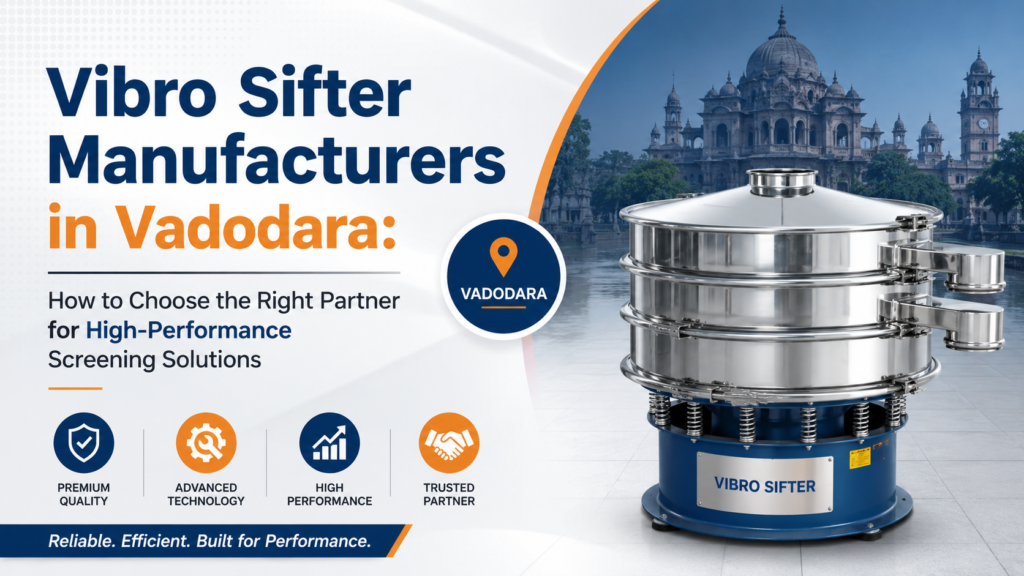
Whether you’re producing pharmaceutical tablets, food powders, specialty chemicals, or industrial minerals, material screening is one process that simply can’t afford mistakes. A torn screen, poor vibration performance, or an incorrectly designed sifter can lead to contamination, production delays, inconsistent product quality, and unnecessary maintenance costs.
That is why selecting the right Vibro Sifter Manufacturers in Vadodara is about much more than comparing prices. You’re choosing a manufacturing partner that directly influences your production efficiency, product quality, and long-term operating costs.
Vadodara has emerged as one of India’s leading industrial manufacturing hubs. Home to advanced engineering companies and precision fabrication experts, the city has built a strong reputation for producing reliable screening and separation equipment used across industries worldwide.
But not every manufacturer delivers the same level of quality. Some focus only on machine production, while experienced manufacturers also provide engineering support, customization, installation guidance, maintenance assistance, and long-term availability of vibro sifter spare components and vibro sifter spare parts.
This guide explains what separates a dependable manufacturer from an average supplier, what features buyers often overlook, and how to make a smart investment that supports years of reliable production.
Why Vadodara Has Become a Hub for Vibro Sifter Manufacturing
Vadodara is known for its strong engineering ecosystem. The city houses numerous fabrication units, stainless steel specialists, machining facilities, and industrial equipment manufacturers that serve domestic as well as international markets.
This manufacturing ecosystem enables companies to produce precision-engineered vibro sifters with shorter production timelines and better quality control.
Another advantage is the availability of experienced engineers who understand industry-specific screening requirements.
Instead of offering one standard machine for every application, leading manufacturers customize solutions based on:
- Product characteristics
- Desired mesh size
- Capacity requirements
- Industry standards
- Hygiene requirements
- Installation space
This engineering-focused approach results in better productivity and longer equipment life.
What Makes a Reliable Vibro Sifter Manufacturer?
Choosing a manufacturer shouldn’t begin with pricing. It should begin with engineering capability.
The best manufacturers understand that every production line is unique.
Look for manufacturers that offer:
| Feature | Why It Matters |
|---|---|
| Stainless Steel Construction | Better durability and hygiene |
| Custom Mesh Sizes | Accurate separation |
| Low Noise Design | Improved working environment |
| Easy Cleaning | Faster maintenance |
| GMP-Compliant Design | Required for pharma and food |
| Strong After-Sales Support | Reduces downtime |
| Readily Available Spare Parts | Faster maintenance |
Experienced manufacturers also test every machine before dispatch to ensure vibration accuracy and smooth performance.
Industries That Depend on Vibro Sifters Every Day
One reason vibro sifters remain so popular is their versatility.
A single machine can process hundreds of different materials with exceptional consistency.
Common industries include:
Pharmaceutical
- Tablet granules
- API powders
- Capsules
- Bulk drugs
Food Processing
- Flour
- Sugar
- Milk powder
- Cocoa
- Coffee
- Spices
Chemical Industry
- Pigments
- Resins
- Fertilizers
- Detergents
Cosmetic Manufacturing
- Face powders
- Talcum powder
- Herbal products
Minerals
- Silica
- Sand
- Limestone
- Ceramic powders
Different industries require different machine configurations, making manufacturer expertise especially valuable.
Why High-Quality Vibro Sifter Spare Parts Matter More Than You Think
Many buyers focus entirely on purchasing the machine and overlook future maintenance.
This often becomes an expensive mistake.
Every vibro sifter contains components that naturally wear over time.
Common vibro sifter spare parts include:
- Screening mesh
- Silicone gasket
- Rubber balls
- Springs
- Clamps
- Vibration motors
- Deck rings
- Motor weights
Poor-quality replacement parts can reduce screening efficiency, increase vibration imbalance, and shorten machine life.
Professional manufacturers supply genuine replacement components that match original specifications.
This helps maintain consistent production quality while reducing unexpected shutdowns.
How Vibro Sifter Spare Availability Saves Production Time
Imagine your production line stopping because a damaged gasket or torn mesh isn’t available.
Every hour of downtime affects:
- Production schedules
- Labor costs
- Delivery commitments
- Customer satisfaction
Reliable manufacturers maintain inventory of vibro sifter spare components for quick replacement.
Instead of waiting weeks for imported parts, businesses can resume production much faster.
When comparing suppliers, always ask:
- Are spare parts stocked locally?
- How quickly can replacements be dispatched?
- Are standard sizes readily available?
- Can customized parts be manufactured?
These questions often matter more than initial machine pricing.
Expert Tips for Choosing the Right Vibro Sifter
Experienced production managers often evaluate details that first-time buyers overlook.
Focus on Build Quality
Check weld finishing, polishing quality, and stainless steel grade.
A smooth finish improves hygiene while reducing powder accumulation.
Match Capacity to Production
Buying an oversized machine increases energy consumption.
Buying a smaller one creates bottlenecks.
Choose equipment based on future production growth.
Ask About Customization
Materials behave differently.
Some powders require ultrasonic screening.
Others need multiple decks.
Customization improves long-term efficiency.
Verify Testing Procedures
Always ask whether machines undergo vibration testing before delivery.
Factory testing reduces installation problems later.
Things Most Buyers Ignore Before Purchasing
Several factors rarely appear in product brochures but significantly impact ownership costs.
Availability of Technical Support
Installation assistance can save days of trial and error.
Energy Consumption
Efficient motors reduce electricity bills over time.
Cleaning Time
Machines designed for quick dismantling improve production efficiency.
Spare Inventory
Always verify long-term availability of replacement parts.
Noise Levels
Lower vibration noise creates a safer working environment.
Common Mistakes Buyers Make
Many purchasing decisions are based only on quotations.
This often leads to unexpected expenses later.
Avoid these mistakes:
- Choosing the lowest-priced machine
- Ignoring spare part availability
- Buying without understanding application requirements
- Not checking material grade
- Overlooking warranty terms
- Skipping manufacturer reputation
- Ignoring maintenance accessibility
Investing slightly more in quality equipment often reduces total operating costs over several years.
Complete Buying Guide for Vibro Sifters
Before requesting quotations, prepare the following information:
Material Details
- Powder type
- Moisture content
- Bulk density
- Temperature
Production Requirements
- Hourly capacity
- Desired mesh size
- Number of separation stages
Machine Specifications
- Stainless steel grade
- Deck configuration
- Motor rating
- Automation compatibility
After-Sales Services
Ask whether the manufacturer provides:
- Installation guidance
- Operator training
- Spare parts support
- AMC services
- Technical troubleshooting
A detailed discussion helps manufacturers recommend the most suitable solution.
Benefits of Working with an Experienced Manufacturer
An experienced manufacturer offers more than equipment.
They become a long-term production partner.
Benefits include:
- Better engineering consultation
- Customized machine design
- Faster production
- Reliable documentation
- Easier maintenance
- Consistent spare availability
- Reduced downtime
- Better return on investment
Companies with years of manufacturing experience also understand changing industry standards and compliance requirements.
Expert Recommendations for Long-Term Performance
Proper maintenance dramatically extends machine life.
Consider these professional practices:
- Inspect screening mesh regularly.
- Replace damaged gaskets immediately.
- Tighten clamps after cleaning.
- Lubricate moving components as recommended.
- Avoid overloading the machine.
- Schedule vibration inspections.
- Keep genuine spare parts in inventory.
Preventive maintenance always costs less than emergency repairs.
Frequently Asked Questions
Q.What industries commonly use vibro sifters?
Ans: They are widely used in pharmaceutical, food processing, chemical, cosmetic, mineral, ceramic, and recycling industries for accurate material separation.
Q. How often should vibro sifter spare parts be replaced?
Ans: Replacement depends on operating hours, material type, and maintenance practices. Screening meshes and rubber components typically require more frequent inspection.
Q. Why is stainless steel preferred?
Ans: Stainless steel offers corrosion resistance, easy cleaning, hygienic operation, and longer service life, making it ideal for food and pharmaceutical applications.
Q. Can vibro sifters be customized?
Ans: Yes. Most experienced manufacturers customize deck size, mesh configuration, motor power, outlet arrangement, and machine dimensions according to application requirements.
Q. What should I check before buying a vibro sifter?
Ans: Evaluate:
- Build quality
- Manufacturer experience
- Spare parts availability
- Machine testing
- Technical support
- Warranty
- Customization options
Q. Why are genuine vibro sifter spare parts recommended?
Ans: Original spare parts maintain machine balance, improve screening accuracy, reduce wear, and help extend equipment life.
Q. How can I improve vibro sifter performance?
Ans: Regular maintenance, timely mesh replacement, proper loading, and using genuine replacement parts all contribute to consistent screening efficiency.
Key Takeaways
Choosing the right vibro sifter manufacturer isn’t just about purchasing equipment—it’s about investing in consistent production quality, dependable engineering support, and long-term operational efficiency.
Remember to evaluate:
- Manufacturing expertise
- Customization capabilities
- Quality certifications
- After-sales service
- Availability of vibro sifter spare parts
- Technical support
- Long-term maintenance costs
These factors have a much greater impact on ownership costs than the initial purchase price alone.
External Authority Suggestion
To strengthen credibility, consider linking to an industry authority such as:
- U.S. Food & Drug Administration (FDA) for pharmaceutical manufacturing guidelines.
- ISO (International Organization for Standardization) for quality management and industrial standards.
- GMP (Good Manufacturing Practice) resources for hygiene and compliance requirements in food and pharmaceutical processing.
Final Thoughts
Selecting the right Vibro Sifter Manufacturers in Vadodara is a decision that influences product quality, operational efficiency, maintenance costs, and production reliability for years to come. The best manufacturers combine precision engineering with dependable after-sales support, readily available vibro sifter spare inventory, and high-quality vibro sifter spare parts to keep your operations running smoothly.
Rather than focusing solely on the lowest quotation, evaluate the manufacturer’s experience, customization capabilities, quality standards, and commitment to long-term customer support. A well-built vibro sifter is an investment that delivers consistent performance and reduces downtime throughout its service life. Contact Mech Tech Steel Industries for more information.
No comment