
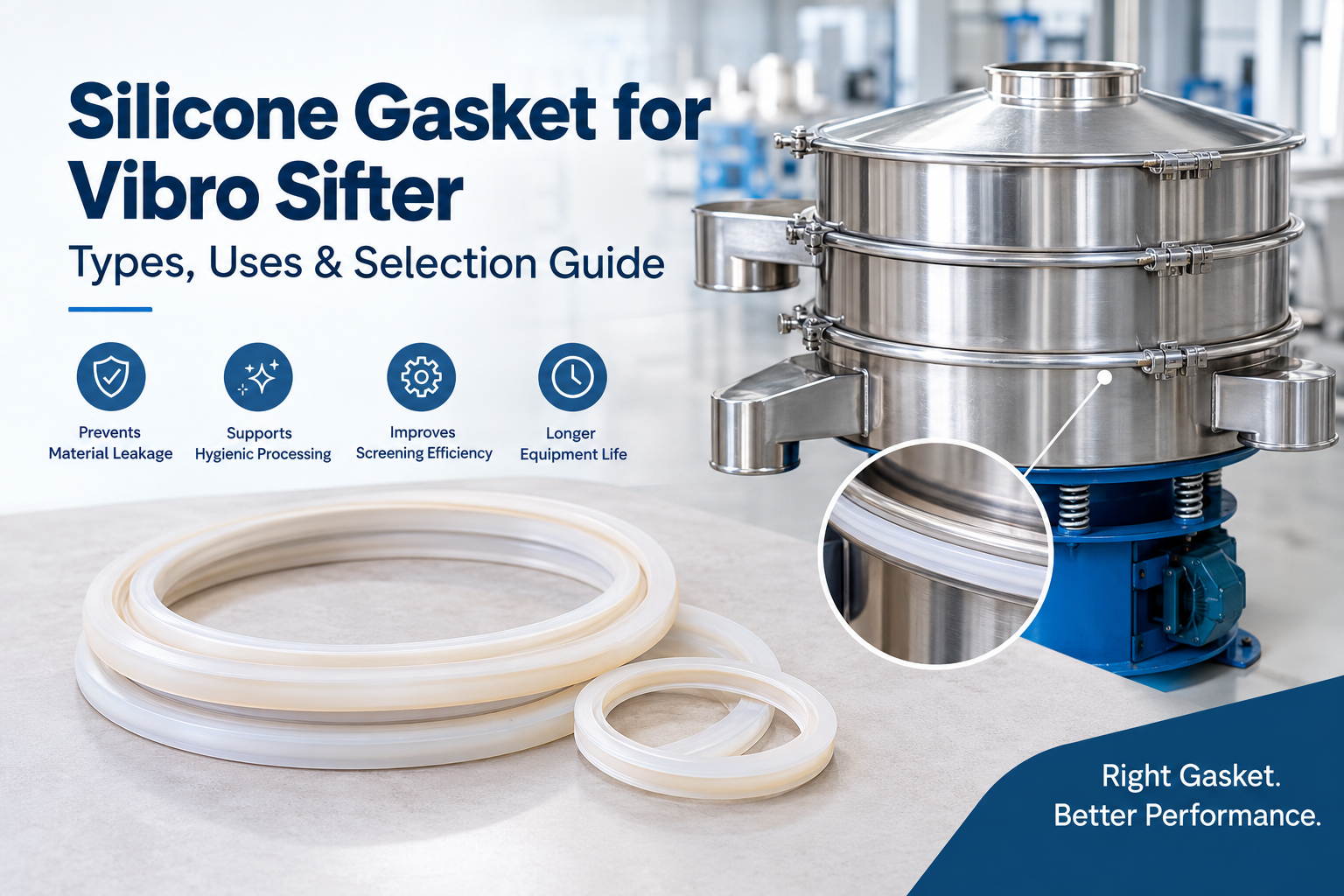
A silicone gasket for vibro sifter plays an important role in maintaining an effective seal between machine components during industrial screening operations. It helps prevent material leakage, supports hygienic processing, and maintains the separation of powders and granules during production. Selecting the right gasket is essential for businesses that depend on consistent screening performance and reliable equipment operation.
Industries such as pharmaceuticals, food processing, chemicals, cosmetics, and nutraceuticals use vibro sifters for particle separation, grading, and screening. In these applications, the quality and suitability of sealing components can affect machine performance, cleanliness, and maintenance requirements.
In this guide, we explain the uses, types, benefits, and selection criteria for silicone gaskets, helping buyers identify suitable replacement components for their screening equipment.
Quick Answer: What Is a Silicone Gasket for a Vibro Sifter?
A silicone gasket for a vibro sifter is a sealing component used at compatible machine joints to help reduce material leakage and maintain the intended sealing arrangement. The correct gasket depends on its dimensions, silicone grade, operating temperature, cleaning conditions, and machine design. For food or pharmaceutical applications, buyers should also verify the material’s suitability and any applicable compliance requirements.
What Is a Silicone Gasket for a Vibro Sifter?
A silicone gasket is a sealing component made from silicone rubber. In a vibro sifter, it may be installed at suitable joints between components such as screen assemblies, covers, lids, or other mating surfaces, depending on the machine design.
Its primary function is to create a suitable seal between connected parts. A correctly selected gasket helps reduce unwanted material leakage and supports the separation of different processing areas.
Unlike rigid sealing materials, silicone rubber can offer flexibility and resilience. Its suitability for a particular application depends on its formulation, hardness, dimensions, operating temperature, and exposure to chemicals or cleaning agents.
For manufacturers and maintenance teams, selecting the right gasket is an important part of maintaining the performance of industrial screening equipment.
Why Is a Silicone Gasket Important in Vibro Sifter Machines?
Vibro sifters operate through vibration, which helps separate particles according to the selected screen mesh. Because the machine vibrates continuously during operation, its sealing components must be suitable for the equipment’s movement and operating conditions.
Here are the main reasons to select an appropriate gasket.
1. Helps Prevent Material Leakage
A properly fitted gasket helps seal the joint between compatible machine components. This can reduce powder leakage and material loss during screening.
2. Supports Hygienic Processing
In applications involving food, pharmaceutical, or nutraceutical products, sealing arrangements can help reduce unwanted material accumulation at joints. The gasket’s design, surface condition, and compatibility with the cleaning process are important considerations.
3. Helps Maintain Screening Efficiency
An incorrectly sized, damaged, or poorly fitted gasket may affect the sealing of the screening assembly. Selecting a suitable replacement helps maintain the intended equipment configuration.
4. Reduces Unplanned Maintenance
Worn or damaged gaskets may require replacement to restore an effective seal. Routine inspection can help maintenance teams identify problems before they cause significant production interruptions.
5. Supports Reliable Equipment Operation
Using a gasket that matches the machine’s dimensions and operating requirements helps maintain a consistent fit during normal use.
Types of Silicone Gaskets Used in Vibro Sifters
The appropriate gasket depends on the equipment design, processing material, temperature, cleaning method, and sealing requirements.
Common gasket configurations include the following.
| Gasket type | Typical application | Important consideration |
|---|---|---|
| Silicone ring gasket | Circular joints in compatible assemblies | Accurate inner and outer diameters |
| Silicone lid gasket | Suitable lid-to-body sealing arrangements | Correct profile and compression |
| Custom-shaped silicone gasket | Equipment with non-standard joint designs | Drawing and dimensional accuracy |
| Food-contact-grade silicone gasket | Suitable food-processing applications | Verification of material compliance for the intended use |
| High-temperature silicone gasket | Applications requiring elevated-temperature resistance | Manufacturer’s temperature limits and operating conditions |
These are general gasket categories rather than a universal specification for every vibro sifter. Always confirm the actual component design with the equipment manufacturer or supplier before ordering.
Key Benefits of Silicone Gaskets for Industrial Screening Equipment
Silicone rubber is selected for various industrial applications because of its useful physical properties. However, the final performance depends on the specific material formulation and service conditions.
Temperature Resistance
Many silicone rubber formulations can operate across a relatively broad temperature range. The exact limits vary by grade, so buyers should confirm the manufacturer’s specifications before using a gasket in a heated process.
Flexibility and Elasticity
Silicone rubber can deform under compression and recover to some extent when the load is removed. This helps it accommodate suitable sealing surfaces when the gasket is correctly designed and installed.
Moisture Resistance
Silicone rubber generally offers good resistance to moisture. Nevertheless, chemical exposure, cleaning agents, and the operating environment should be evaluated before selecting a material.
Material Compatibility
Different industrial processes expose gaskets to different substances. A suitable silicone formulation should be selected according to the product being processed, cleaning chemicals, temperature, and any applicable regulatory requirements.
Replacement and Maintenance Convenience
Keeping the correct replacement gaskets available can help maintenance teams respond more quickly to wear or sealing problems.
How to Choose the Right Silicone Gasket for a Vibro Sifter
Choosing a gasket based only on its material name can lead to fitment or performance problems. Buyers should evaluate the complete application before placing an order.
1. Check the Gasket Dimensions
Measure the existing gasket or consult the equipment drawing.
Important dimensions may include:
- Inner diameter
- Outer diameter
- Thickness
- Cross-sectional profile
- Overall shape
Even a small dimensional difference can affect the fit, so avoid ordering solely on the basis of a visual comparison.
2. Confirm the Material Grade
Not all silicone gaskets have identical properties. Ask the supplier about the material grade and its suitability for the intended application.
For food or pharmaceutical processing, verify the applicable material documentation and any relevant compliance requirements.
For food-processing applications, buyers should verify the material’s suitability and applicable requirements for the intended use. The FDA’s guidance on food-contact material regulations provides additional information about evaluating these requirements.
3. Understand the Operating Temperature
Check the minimum and maximum temperatures encountered during production, cleaning, and sanitisation.
The selected gasket must be suitable for the actual conditions rather than only the normal room temperature.
4. Consider Chemical and Cleaning Compatibility
Cleaning solutions and process chemicals can affect elastomers differently. Confirm compatibility with the gasket manufacturer, particularly if the machine undergoes frequent washing or chemical cleaning.
5. Match the Gasket to the Machine Model
Different vibro sifter designs may use different sealing arrangements. Provide the machine model, existing gasket dimensions, photographs, or technical drawings when requesting a replacement.
6. Evaluate Compression and Fit
The gasket should provide the intended seal without excessive compression. Over-tightening or incorrect installation can damage the gasket or affect the assembly.
Follow the equipment manufacturer’s installation instructions.
Common Signs That a Vibro Sifter Gasket Needs Replacement
Gaskets can deteriorate through repeated use, compression, cleaning, temperature exposure, or chemical contact.
The following table lists common warning signs.
| Warning sign | Possible cause | Recommended action |
|---|---|---|
| Powder leaking from joints | Damaged gasket or poor fit | Inspect the sealing surface and gasket dimensions |
| Visible cracks or tears | Ageing or mechanical damage | Replace with a compatible component |
| Flattened or permanently deformed gasket | Compression set or excessive compression | Check gasket condition and assembly pressure |
| Loose or uneven fit | Incorrect dimensions or installation | Verify the profile and mounting arrangement |
| Swelling or surface deterioration | Possible material incompatibility | Review process chemicals and material specifications |
| Repeated sealing problems | Incorrect gasket selection or assembly issues | Check the machine design and consult a qualified supplier |
Regular inspection and timely replacement of worn components can help maintain screening performance. For more practical maintenance advice, read our vibro sifter spare parts maintenance guide
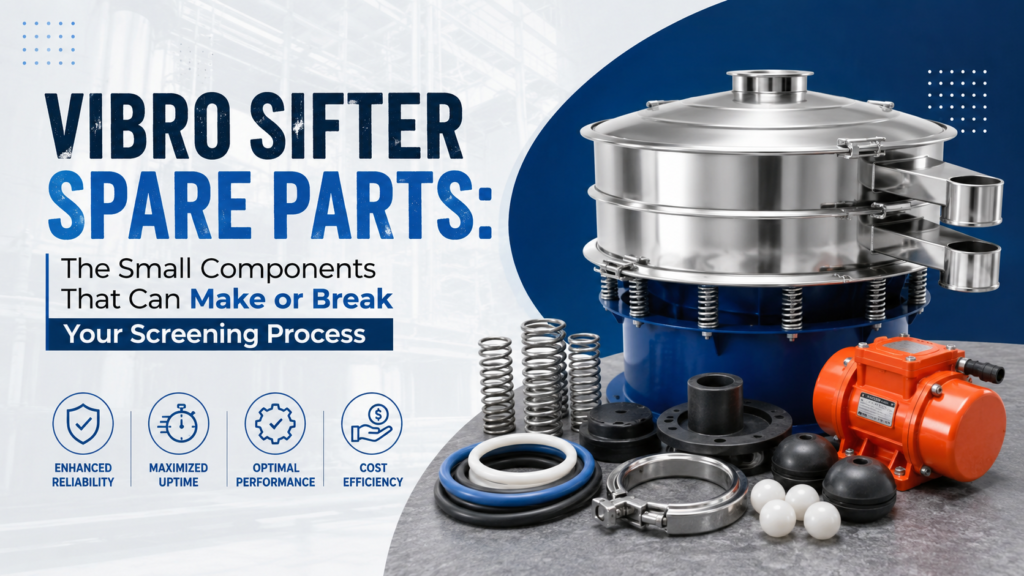
Silicone Gaskets and Other Vibro Sifter Spare Parts
A gasket is only one component of a vibro sifter’s overall assembly. Maintaining the other relevant components is also important for reliable operation.
Depending on the machine design, common replacement components may include:
- Screen mesh and sieves
- Screen rings
- Clamp rings
- Lids and covers
- Outlet components
- Sealing gaskets
- Other compatible assembly components
When ordering replacements, check whether the component is available individually or as part of an assembly. This helps maintenance teams identify the correct part and avoid unnecessary replacement of compatible components.
Businesses looking for Vibro Sifter Spare Parts Manufacturer in India or a reliable Vibro Sifter Spare Parts Supplier should compare technical suitability, product documentation, dimensional accuracy, and delivery requirements.
Buyers sourcing from Gujarat may also search for Vibro Sifter Spare Parts in Gujarat or a local Vibro Sifter Components Supplier to simplify communication and procurement.
If your requirement includes replacement screening components, it is also worth checking specifications from a Vibro Sifter Screen Mesh Manufacturer to ensure the screen and associated sealing components are suitable for the same machine assembly.
Why Choose the Right Vibro Sifter Spare Parts Supplier?
A suitable supplier should help buyers identify components that match their equipment and application requirements.
Before confirming an order, consider the following points:
- Dimensional accuracy: Confirm that the gasket matches the required measurements or technical drawing.
- Material information: Request details about the silicone grade and its intended use.
- Application suitability: Explain the operating temperature, cleaning process, and material being screened.
- Product documentation: Ask for relevant technical documents or compliance information where required.
- Replacement support: Check whether the supplier can assist with identification and repeat orders.
- Clear communication: Share photographs, equipment details, and existing part references to reduce ordering errors.
For industrial buyers, the best choice is not necessarily the cheapest gasket. It is the component that meets the machine’s requirements and offers suitable performance under actual operating conditions.
Frequently Asked Questions
1. What is a silicone gasket used for in a vibro sifter?
A silicone gasket is used to seal compatible joints in a vibro sifter assembly. It helps reduce material leakage and supports the intended sealing arrangement of the equipment.
2. Is silicone suitable for food-processing vibro sifters?
Certain silicone formulations are suitable for specific food-contact applications. However, not every silicone gasket automatically meets food-contact requirements. Buyers should verify the exact material, intended use, and applicable compliance documentation.
3. How do I select the correct silicone gasket size?
Check the inner diameter, outer diameter, thickness, and gasket profile. Where possible, confirm these details against the equipment drawing or obtain specifications from the original equipment manufacturer.
4. How often should a vibro sifter gasket be replaced?
There is no universal replacement interval. Replacement depends on operating hours, compression, temperature, cleaning conditions, material compatibility, and the manufacturer’s recommendations. Inspect the gasket regularly and replace it when damaged or no longer able to provide a suitable seal.
5. Can I use any silicone gasket as a replacement?
No. A replacement must match the required dimensions, material properties, and operating conditions. An unsuitable gasket may cause leakage, premature wear, or assembly problems.
6. Where can I find vibro sifter spare parts in India?
Contact a supplier of industrial screening components and provide your machine model, gasket dimensions, material requirements, and intended application. This information helps the supplier identify a suitable replacement.
Conclusion
A suitable silicone gasket for vibro sifter helps maintain effective sealing, supports hygienic processing where appropriate, and reduces the risk of material leakage at compatible machine joints. Choosing the right component requires attention to dimensions, material grade, temperature, cleaning conditions, and machine compatibility.
For businesses sourcing vibro sifter components, accurate specifications and clear communication with the supplier can make replacement and maintenance easier.
Mech Tech Steel can use this topic to connect readers with its existing vibro sifter spare parts range. Before placing an order, buyers should confirm the required gasket specifications and application suitability.
Need help identifying the right vibro sifter spare parts? Contact the Mech Tech Steel team with your machine details and component requirements to discuss a suitable solution.
No comment