
How Vibro Sifter Spare Supports Reliable Screening Performance
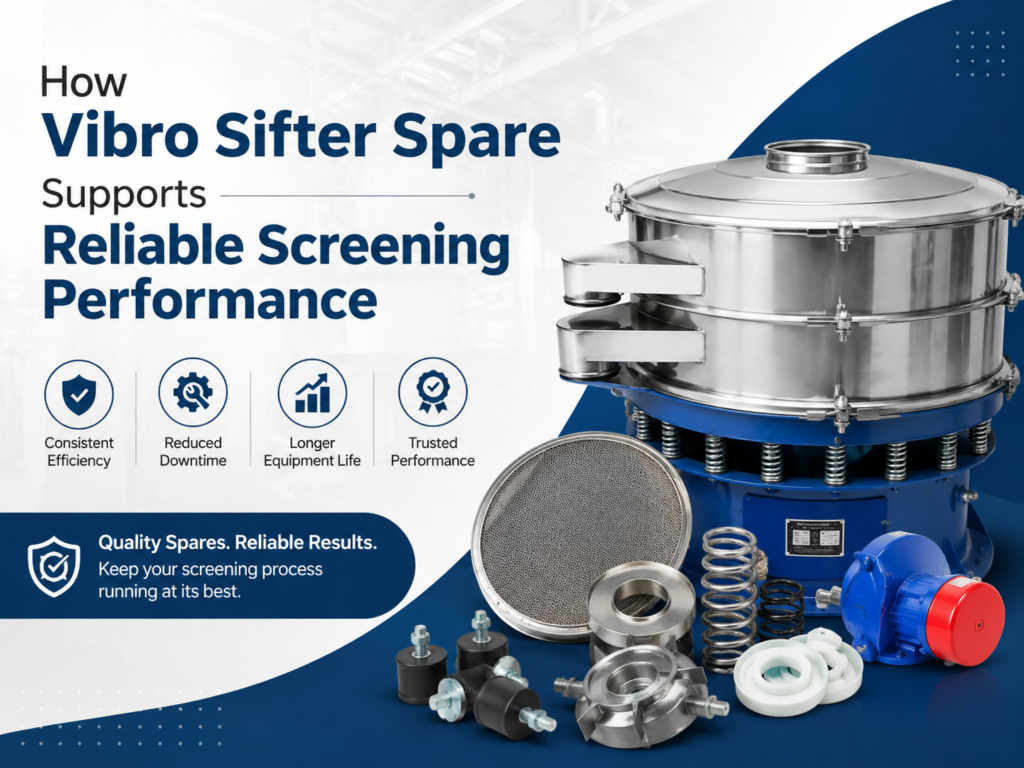
Industrial manufacturing depends on accurate material separation to maintain product quality and production efficiency. Whether processing powders, granules, chemicals, spices, minerals, or pharmaceutical ingredients, effective screening ensures materials are separated according to the required particle size. One important factor behind reliable machine performance is the proper maintenance of every Vibro Sifter Spare component.
Instead of viewing spare parts only as replacement items, industries increasingly consider them essential elements of preventive maintenance. Understanding how each component contributes to screening performance helps operators improve equipment reliability and reduce production disruptions.
Understanding the Screening Process in Vibro Sifters
A vibro sifter separates materials through controlled vibration generated by its motor assembly. As material enters the machine, vibration distributes particles across the screen surface. Smaller particles pass through the mesh openings, while larger particles remain above the screen for further processing or removal.
The efficiency of this screening process depends on several interconnected components working together. Even a small worn gasket, damaged screen, or weakened spring can influence vibration movement and material flow.
This is why regular inspection of Vibro Sifter Spare components is important for maintaining consistent screening accuracy.
How Different Spare Components Influence Machine Performance
Every spare component performs a specific mechanical function within the vibro sifter.
Screening Mesh
The mesh is responsible for particle separation. Different mesh sizes are selected according to production requirements. A damaged or stretched mesh may produce inconsistent screening results and affect final product quality.
Springs
Springs absorb vibration and support the movement of the machine. Proper spring condition helps maintain balanced vibration during operation and contributes to stable material distribution across the screen.
Gaskets and Seals
Gaskets create a secure connection between different machine sections. They help reduce material leakage and maintain hygienic operation in industries handling fine powders or sensitive materials.
Clamps and Fasteners
Clamps securely hold screen assemblies and machine covers together. Proper fastening ensures operational stability and prevents unnecessary movement during high-frequency vibration.
Together, these components demonstrate why selecting suitable Vibro Sifter Spare parts is closely connected with machine reliability.
Relationship Between Vibro Screening and Industrial Sieving
Although the terms are often used together, vibro screening and industrial sieving describe a broader material separation process used across manufacturing industries.
Vibro screening mainly refers to the vibrating separation method, while industrial sieving includes the overall process of classifying materials according to particle size using industrial equipment.
Industries rely on this process because it helps achieve:
Uniform particle distribution
Removal of oversized materials
Better processing consistency
Improved production quality
Controlled material classification
Efficient equipment maintenance supports these outcomes by ensuring the screening mechanism continues functioning as intended.
Why Industrial Sieves and Screens Require Regular Inspection
Among all machine components, industrial sieves and screens experience continuous contact with processed material. Fine powders, abrasive particles, moisture, and prolonged vibration may gradually affect screen condition.
Regular inspection helps identify common operational issues before they become serious.
Operators should check for:
Torn or damaged mesh
Material blockage within openings
Uneven screen tension
Bent screen frames
Loose mounting arrangements
Excessive wear around screen edges
Early identification of these conditions supports better screening efficiency and helps maintain consistent material quality throughout production.
Common Signs That Spare Components Need Attention
A vibro sifter often provides visible indications when maintenance is required. Recognizing these signs can help avoid unexpected equipment failure.
Some common indicators include:
Uneven material movement: Material collecting heavily on one side may indicate issues with vibration balance or support components.
Reduced screening efficiency: If correctly sized particles are not passing through efficiently, the screen condition should be inspected.
Increased vibration noise: Unusual operational sounds may suggest wear in mechanical components or fastening systems.
Material leakage: Damaged gaskets or improperly secured clamps can allow fine material to escape between machine sections.
Frequent production interruptions: Repeated downtime may indicate that certain spare components require replacement as part of preventive maintenance.
Monitoring these signs improves the overall reliability of screening equipment.
Preventive Maintenance for Better Screening Results
Preventive maintenance is one of the most effective ways to improve equipment performance without waiting for complete component failure.
A structured maintenance approach includes:
Inspecting screens before production cycles
Checking gasket condition regularly
Ensuring clamps remain properly tightened
Cleaning industrial sieves and screens after processing
Monitoring vibration consistency
Replacing worn spare components according to machine condition
Rather than replacing every component at fixed intervals, maintenance decisions should consider actual operating conditions, production volume, and visible wear.
This approach supports efficient vibro screening and industrial sieving while helping maintain long-term machine reliability.
Factors Affecting Screening Accuracy
Several operational factors influence the quality of industrial screening beyond the machine itself.
Material Characteristics
Particle shape, moisture content, density, and flow behaviour affect how efficiently material passes through the screen.
Screen Selection
Choosing the appropriate mesh opening is essential for achieving the desired particle classification.
Feed Consistency
An excessive or uneven material feed can reduce screening efficiency by overloading the screen surface.
Equipment Condition
Well-maintained components allow the vibration system to operate consistently and improve material movement across the screening area.
Understanding these factors enables industries to optimize production while maintaining dependable screening performance.
Importance of Compatibility in Spare Components
Not every replacement component is suitable for every vibro sifter design. Machine dimensions, screen size, fastening arrangements, and operating specifications vary between equipment models.
Compatible Vibro Sifter Spare components help maintain proper fitting and operational balance. Using correctly matched parts supports reliable assembly, efficient vibration transmission, and consistent screening performance without unnecessary mechanical stress.
For this reason, equipment specifications should always be verified before selecting replacement components.
Conclusion
Reliable material separation depends on more than vibration alone. The condition of screens, gaskets, springs, clamps, and other Vibro Sifter Spare components directly influences the effectiveness of screening operations.
By understanding the relationship between machine maintenance, vibro screening and industrial sieving, and the role of industrial sieves and screens, manufacturers can improve operational consistency and maintain better production efficiency. Regular inspection and preventive maintenance remain essential practices for achieving dependable screening performance across industrial applications.
Contact Mech Tech Steel Industries for more information.
Frequently Asked Questions
Q. What is the role of a Vibro Sifter Spare in screening equipment?
Ans: A Vibro Sifter Spare helps maintain the operational efficiency of vibro sifters by replacing worn or damaged components such as screens, gaskets, springs, and clamps that support reliable screening performance.
Q. How does vibro screening differ from industrial sieving?
Ans: Vibro screening uses vibration to separate materials, while industrial sieving is the broader process of classifying particles by size using industrial sieves and screens.
Q. Why do industrial sieves and screens need regular maintenance?
Ans: Regular maintenance helps prevent mesh damage, blockage, uneven tension, and wear that can reduce screening accuracy and affect production quality.
Q. What causes poor screening efficiency in a vibro sifter?
Ans: Poor screening efficiency may result from damaged screens, incorrect mesh size, uneven material feeding, worn spare components, or inconsistent machine vibration.
Q. How can preventive maintenance improve vibro sifter performance?
Ans: Preventive maintenance helps identify worn components early, reduces unexpected downtime, improves screening consistency, and supports longer equipment service life.
No comment