
Vibro Sifter Sieves Manufacturer: A Complete Guide for Industrial Buyers
Introduction
Accurate powder screening is essential for maintaining product quality, improving production efficiency, and reducing material waste. Industries such as pharmaceuticals, food processing, chemicals, cosmetics, and nutraceuticals rely on efficient screening systems to separate particles and remove unwanted impurities. Choosing the right Vibro Sifter Sieves Manufacturer helps businesses achieve consistent particle sizes, reliable screening performance, and smooth production operations. The quality of the sieve mesh, frame construction, and compatibility with existing equipment can directly affect screening results. Understanding these factors helps manufacturers select suitable sifter sieves for their specific industrial requirements.
Quick Summary for Google AI Overview
Vibro sifter sieves are screening components used to separate powders and granules according to particle size. They help remove oversized particles, improve product consistency, and support efficient material processing. Pharmaceutical, food, chemical, cosmetic, and other powder-processing industries use these sieves to maintain quality and achieve reliable production results.
What Are Vibro Sifter Sieves?
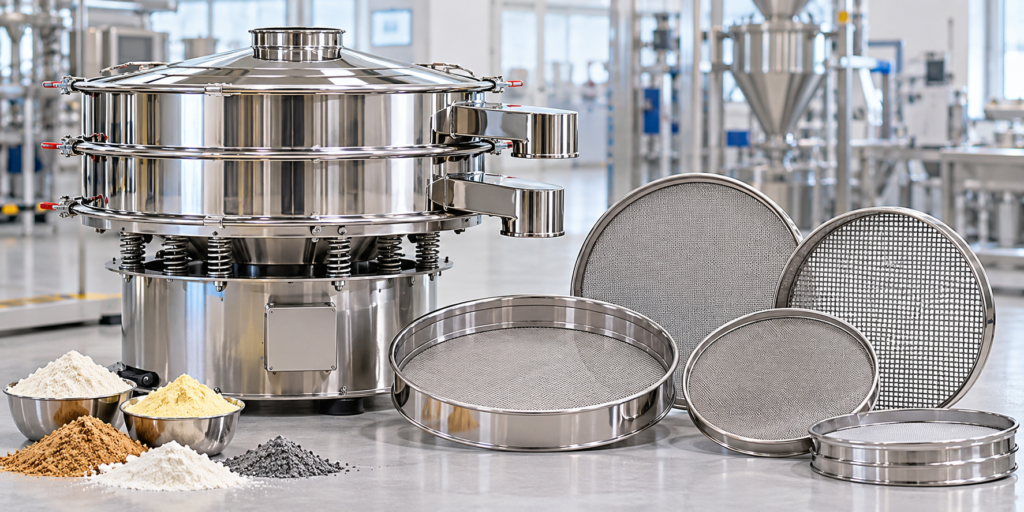
Vibro sifter sieves are mesh-based screening components fitted inside vibrating sifting machines. They separate materials into different particle sizes by allowing smaller particles to pass through the mesh while retaining larger particles.
These sieves are available in different mesh sizes, materials, and frame configurations to suit specific applications. Stainless steel is commonly used because of its corrosion resistance, durability, and suitability for many industrial processing environments.
A reliable Vibro Sifter Screen Manufacturer can help buyers select the correct mesh opening, wire diameter, and screen design based on the material being processed and the required screening accuracy.
Why Are Vibro Sifter Sieves Important?
Screening quality affects product consistency, processing time, and equipment performance. An unsuitable or damaged sieve may cause material contamination, uneven particle distribution, reduced output, or frequent production interruptions.
High-quality sieves help manufacturers maintain consistent screening results while supporting their production and quality-control requirements.
For example, pharmaceutical manufacturers use suitable screens to classify powders and granules, while food processors use them to remove unwanted particles from ingredients. Chemical and pigment manufacturers also depend on appropriate mesh selection for effective powder classification.
Selecting the right sieve is therefore an important part of maintaining efficient and dependable production.
Key Features of Industrial Sifter Sieves
When evaluating an Industrial Sifter Screen Manufacturer, consider the following features:
- Suitable mesh sizes: Different mesh openings support the separation of fine powders, granules, and coarse particles.
- Stainless steel construction: Appropriate stainless steel grades offer durability and corrosion resistance for compatible applications.
- Secure mesh fixing: Proper mesh tension and attachment help reduce the risk of loosening during operation.
- Compatible frame design: The sieve should fit the existing sifter model and maintain a secure seal.
- Application-specific materials: Mesh and frame materials should suit the product, cleaning process, and operating environment.
- Custom manufacturing options: Custom dimensions and configurations can help meet specific machine and production requirements.
Benefits of High-Quality Vibro Sifter Sieves
Choosing the right sieve offers several practical advantages:
- Consistent product quality: Accurate screening helps maintain the required particle-size distribution.
- Improved production efficiency: Suitable mesh selection can support smooth material flow and effective screening.
- Reduced material waste: Proper separation helps minimize the rejection of acceptable material caused by unsuitable screening.
- Lower maintenance requirements: Durable construction and correct installation can reduce avoidable screen damage.
- Better process control: Consistent screening makes it easier to maintain repeatable production results.
- Reduced downtime: Reliable sieves and readily available replacement parts can help minimize interruptions during maintenance.
Actual performance depends on material characteristics, mesh selection, machine settings, and operating conditions.
Applications of Vibro Sifter Sieves
Vibro sifter sieves support a wide range of industrial processes.
- Pharmaceutical and API industries: Screening powders, granules, and selected intermediate materials.
- Food and beverage processing: Sieving flour, starch, sugar, spices, and other compatible ingredients.
- Chemical and specialty chemical industries: Classifying powders, additives, and chemical intermediates.
- Cosmetic and personal care manufacturing: Screening suitable cosmetic powders and powdered ingredients.
- Nutraceutical and herbal industries: Processing powdered supplements, botanical materials, and herbal ingredients.
- Fertilizer and agrochemical industries: Separating granules and powders according to production requirements.
- Paint and pigment industries: Screening compatible dry pigments and powdered raw materials.
- Industrial powder processing: Removing oversized particles and achieving the required particle-size range.
The correct screen specification depends on the material, process conditions, and quality requirements.
How to Choose the Right Vibro Sifter Sieves Manufacturer
Before selecting a supplier, evaluate these six factors.
- Check mesh specifications: Confirm the required mesh opening, wire diameter, and screening accuracy for your material.
- Verify material quality: Ask about stainless steel grades, material traceability, and compatibility with your process.
- Confirm machine compatibility: Provide the sifter model, frame dimensions, and existing screen specifications.
- Evaluate manufacturing quality: Check mesh tension, frame finishing, joint quality, and overall construction.
- Ask about spare parts: Choose a supplier that can support replacement screens, seals, clamps, and other compatible components.
- Compare technical support: Consider customization options, delivery timelines, documentation, and after-sales assistance.
For buyers sourcing replacement components, a dependable Vibro Sifter Mesh Supplier can help identify suitable mesh specifications and reduce compatibility issues.
Common Mistakes to Avoid
Avoid these common purchasing mistakes when selecting industrial sifter sieves:
- Choosing a mesh size without checking the required particle-size distribution.
- Ignoring frame dimensions and compatibility with the existing machine.
- Selecting materials without considering corrosion resistance and cleaning requirements.
- Focusing only on the initial purchase price instead of durability and service life.
- Overlooking mesh tension, sealing, and the risk of cross-contamination.
- Buying replacement components without verifying the original equipment specifications.
A qualified Vibro Shifter Spare Parts Manufacturer can help identify compatible replacement components and support maintenance planning. Always confirm the exact equipment model and specifications before ordering.
Conclusion
Vibro sifter sieves play an important role in powder screening, particle classification, and industrial quality control. The right mesh size, material, frame design, and manufacturing quality can improve screening consistency while reducing avoidable maintenance issues.
Businesses should assess their application requirements and equipment compatibility before selecting a supplier. If you need customized screens or replacement components, contact a qualified manufacturer to discuss your machine specifications, material requirements, and production goals.
Frequently Asked Questions
1. What is a vibro sifter screen?
A vibro sifter screen is a mesh assembly installed inside a vibrating sifting machine. It separates powders and granules according to particle size by allowing smaller particles to pass through while retaining larger ones. Screen performance depends on mesh opening, wire diameter, material properties, vibration settings, and the condition of the screening assembly.
2. What are the benefits of vibro sifter sieves?
Vibro sifter sieves help improve particle-size consistency, remove oversized material, and support efficient powder processing. Properly selected screens can reduce unnecessary reprocessing, support product quality, and minimize avoidable downtime. Their benefits depend on correct mesh selection, suitable materials, regular inspection, and compatibility with the screening machine and the material being processed.
3. Where are vibro sifter sieves used?
Vibro sifter sieves are used in pharmaceutical, food, chemical, cosmetic, nutraceutical, herbal, fertilizer, agrochemical, and pigment manufacturing. Common applications include screening raw materials, classifying powders, separating granules, and removing unwanted oversized particles. The required screen design varies according to the product, processing conditions, cleanliness requirements, and desired particle-size range.
4. How do I choose the right vibro sifter sieve?
Start by identifying the required particle-size range, material characteristics, and screening capacity. Then confirm the mesh opening, wire diameter, construction material, frame dimensions, and compatibility with your machine. Consider cleaning procedures, operating conditions, and replacement availability. Consulting an experienced manufacturer can help you avoid incorrect specifications and unnecessary production interruptions.
5. Are vibro sifter sieves customizable?
Yes, many manufacturers offer customization based on machine dimensions, mesh specifications, frame design, and application requirements. Custom screens may be useful when replacing older components or meeting specific production needs. Before ordering, provide the equipment model, existing screen measurements, material details, and required mesh size so the supplier can assess compatibility.
6. Which material is best for vibro sifter mesh?
Stainless steel is widely used for industrial sifter mesh because it offers strength and corrosion resistance. The appropriate grade depends on the product, cleaning chemicals, moisture exposure, and hygiene requirements. Applications involving food or pharmaceuticals may require additional material documentation and validation. Always confirm material suitability with your equipment supplier and quality team.
7. How often should vibro sifter screens be replaced?
Replacement frequency depends on operating hours, material abrasiveness, mesh quality, cleaning methods, and production conditions. Inspect screens regularly for broken wires, stretching, corrosion, loose fittings, and damaged seals. Replace damaged screens promptly when they can affect product quality or screening performance. Following a documented maintenance schedule helps prevent unexpected failures.
8. What is the difference between a vibro sifter screen and a mesh?
The mesh is the woven or formed screening material with defined openings that control particle separation. The screen assembly generally includes the mesh, supporting frame, and fixing arrangement required for installation in the sifter. Understanding this distinction helps buyers specify either replacement mesh or a complete screen assembly when contacting a manufacturer.
No comment