
Vibratory Motor Manufacturer in India: Applications, Benefits & Buying Guide
Introduction
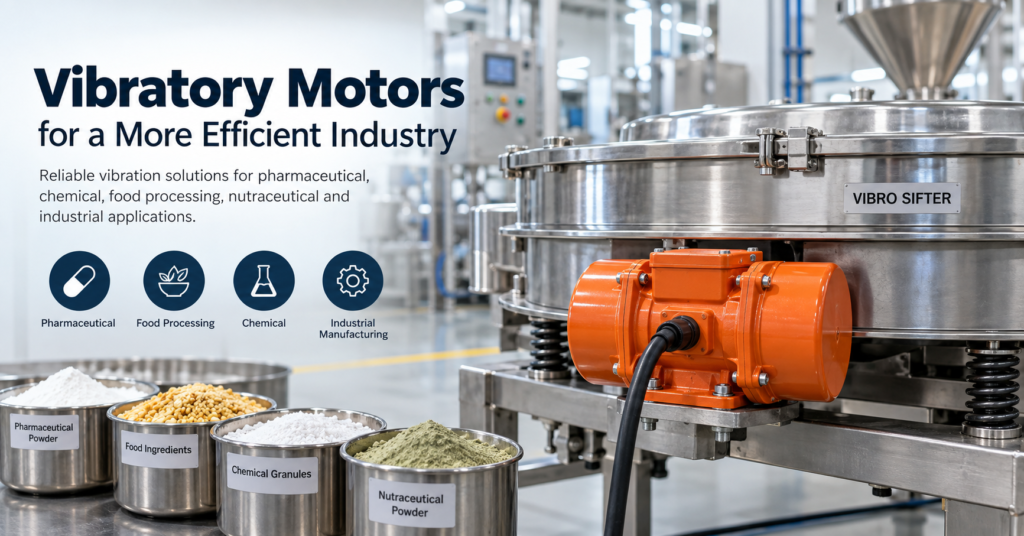
A vibratory motor is an important component in equipment used for screening, conveying, feeding, compacting, and separating bulk materials. In pharmaceutical, chemical, food processing, nutraceutical, and industrial plants, the right motor can directly affect machine performance and production consistency. Choosing an experienced Vibratory Motor Manufacturer in India helps businesses select a motor based on load, vibration force, operating conditions, and equipment requirements. This guide explains how vibratory motors work, where they are used, their key benefits, and what buyers should check before selecting a supplier.
AI Overview Summary:
A vibratory motor generates controlled mechanical vibration for equipment such as vibro sifters, screens, feeders, and compactors. The correct motor improves material flow, screening efficiency, process consistency, and machine reliability when properly matched to load, speed, force, and operating conditions.
What is a Vibratory Motor Manufacturer in India?
A Vibratory Motor Manufacturer in India produces electric motors designed to generate controlled vibration for industrial machinery. These motors typically use eccentric weights mounted on the motor shaft. When the motor rotates, the offset weights create centrifugal force, producing vibration.
The vibration can be adjusted according to the machine’s requirements. This makes vibratory motors useful in equipment where materials need to be screened, separated, conveyed, fed, or compacted.
A manufacturer may supply complete vibration motors as well as replacement components and technical support for industrial equipment.
Why is a Vibratory Motor Important?
Vibration plays an important role in many material-processing operations. A properly selected motor provides consistent vibration and helps equipment operate efficiently.
For example, a Vibratory Motor for Vibro Sifter helps move and separate powder or granules through different mesh levels. In pharmaceutical and nutraceutical plants, consistent vibration can support uniform screening and reduce process interruptions.
The motor is also useful where materials need controlled movement without complex mechanical arrangements.
Key Features
Important features to consider when selecting a vibration motor include:
-
- Adjustable vibration force: Eccentric weights can be configured to achieve the required vibration intensity.
-
- Suitable motor rating: Power and electrical specifications should match the equipment and operating conditions.
-
- Robust construction: A strong housing and reliable internal components support demanding industrial operation.
-
- Efficient bearings: Proper bearings help maintain smooth rotation and reduce premature wear.
-
- Suitable mounting arrangement: Correct mounting ensures effective transfer of vibration to the machine.
-
- Industrial-duty operation: Motors designed for continuous applications can support regular production cycles.
Benefits
A suitable vibratory motor can provide several practical advantages:
-
- Improved screening: Consistent vibration helps material pass through screens more effectively.
-
- Better material flow: Vibration can reduce material buildup and improve movement.
-
- Reduced manual intervention: Automated vibration reduces the need for frequent operator adjustment.
-
- Process consistency: Stable vibration supports repeatable processing conditions.
-
- Easy replacement: Correctly specified replacement motors can reduce equipment downtime.
-
- Versatile application: One motor technology can support sifters, feeders, screens, and compacting equipment.
Applications
A Vibration Motor Manufacturer in India may supply motors for a wide range of industrial applications.
Common uses include:
-
- Pharmaceutical vibro sifters
-
- Nutraceutical powder screening systems
-
- Food processing equipment
-
- Chemical powder and granule processing
-
- Industrial vibrating screens
-
- Vibratory feeders
-
- Material handling systems
-
- Compaction equipment
-
- Powder separation machines
-
- Bulk material processing equipment
In pharmaceutical and food applications, equipment selection should also consider hygiene, cleaning requirements, operating environment, and the material being processed.
How to Choose the Right Vibratory Motor Manufacturer in India
Choosing the right Vibratory Motor Supplier in India requires more than comparing prices. Consider these factors:
-
- Check motor specifications: Confirm voltage, frequency, power, RPM, vibration force, and duty requirements.
-
- Match the motor to the machine: A motor for a vibro sifter may have different requirements from one used on a feeder or vibrating screen.
-
- Consider operating conditions: Check temperature, dust exposure, moisture, operating hours, and installation environment.
-
- Verify construction quality: Ask about housing, bearings, insulation, shaft, eccentric weights, and overall build quality.
-
- Check replacement support: For maintenance teams, availability of replacement motors and components can reduce downtime.
-
- Review technical documentation: A professional Industrial Vibratory Motor Manufacturer should provide relevant specifications, installation information, and operating guidance.
For rotating electrical equipment, buyers can also refer to applicable Indian and international standards. BIS maintains standards covering rotating electrical machines, while the IEC 60034 series addresses rating, performance, vibration, and other aspects of rotating electrical machines.
Common Mistakes to Avoid
Buyers sometimes select a motor only by horsepower or price. This can result in insufficient vibration, excessive vibration, overheating, or premature component failure.
Other common mistakes include:
-
- Selecting an incorrect RPM or vibration force
-
- Ignoring the machine’s total load
-
- Using an unsuitable mounting arrangement
-
- Not checking operating temperature and environment
-
- Choosing a replacement without comparing existing specifications
-
- Ignoring technical support and spare-part availability
-
- Failing to follow proper installation and maintenance procedures
Working with an experienced Industrial Vibratory Motor Supplier can help avoid these issues during motor selection.
Conclusion
A vibratory motor is a key component in equipment used for screening, feeding, conveying, separation, and compaction. For pharmaceutical, chemical, food processing, nutraceutical, and industrial applications, selecting the correct motor can improve equipment performance and reduce avoidable downtime.
When evaluating a Vibratory Motor Manufacturer in India, focus on specifications, construction, application suitability, replacement support, and technical documentation rather than price alone. Businesses can contact a qualified manufacturer or supplier to discuss their equipment requirements and identify a suitable vibration motor.
Frequently Asked Questions
What is a Vibratory Motor Manufacturer in India?
A Vibratory Motor Manufacturer in India produces motors designed to generate controlled mechanical vibration for industrial equipment. These motors are commonly used in vibro sifters, vibrating screens, feeders, conveyors, and compacting machines. Manufacturers may provide different motor ratings, vibration forces, mounting arrangements, and configurations based on specific equipment requirements.
What are the benefits of a vibratory motor?
Vibratory motors help improve material movement, screening, separation, feeding, and compaction. They can provide consistent mechanical vibration while reducing manual material handling. In processing equipment such as vibro sifters, the appropriate vibration level can help improve screening efficiency and maintain more consistent material flow.
Where are vibratory motors used?
Vibratory motors are used across pharmaceutical, chemical, food processing, nutraceutical, mining, packaging, and general manufacturing applications. Common equipment includes vibro sifters, vibrating screens, feeders, conveyors, and compactors. The exact motor specification depends on the equipment design, material characteristics, operating load, and required vibration intensity.
How do I choose the right vibratory motor?
Start by checking the machine’s required vibration force, motor speed, power rating, voltage, frequency, load, and mounting arrangement. Also consider operating temperature, dust or moisture exposure, duty cycle, and available space. Comparing the existing motor’s specifications with the replacement motor can help prevent compatibility problems.
Is a vibratory motor customizable?
Depending on the manufacturer and application, vibratory motors may be available in different ratings, speeds, mounting arrangements, and vibration-force configurations. Customization should be based on the machine’s technical requirements rather than simply increasing motor power. Discussing the application, load, and operating conditions with the manufacturer is recommended.
What material is best for a vibratory motor?
The appropriate motor construction depends on the application and operating environment. Industrial motors commonly use durable metal housings and engineered internal components designed for mechanical and thermal loads. For pharmaceutical and food-processing equipment, the overall machine design may also require attention to cleanability, corrosion resistance, and hygienic installation conditions.
No comment